Control Valve
-
Product Description
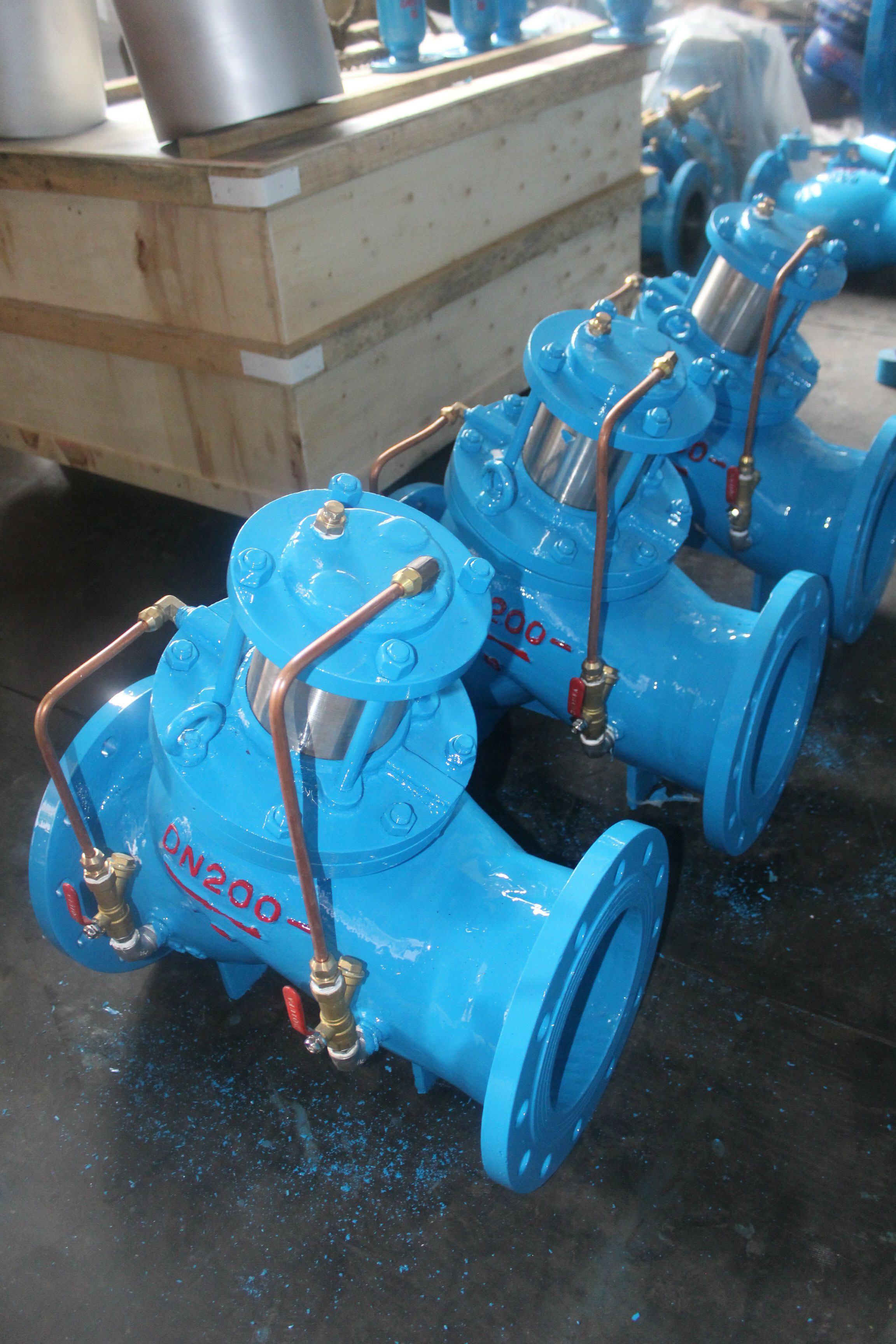
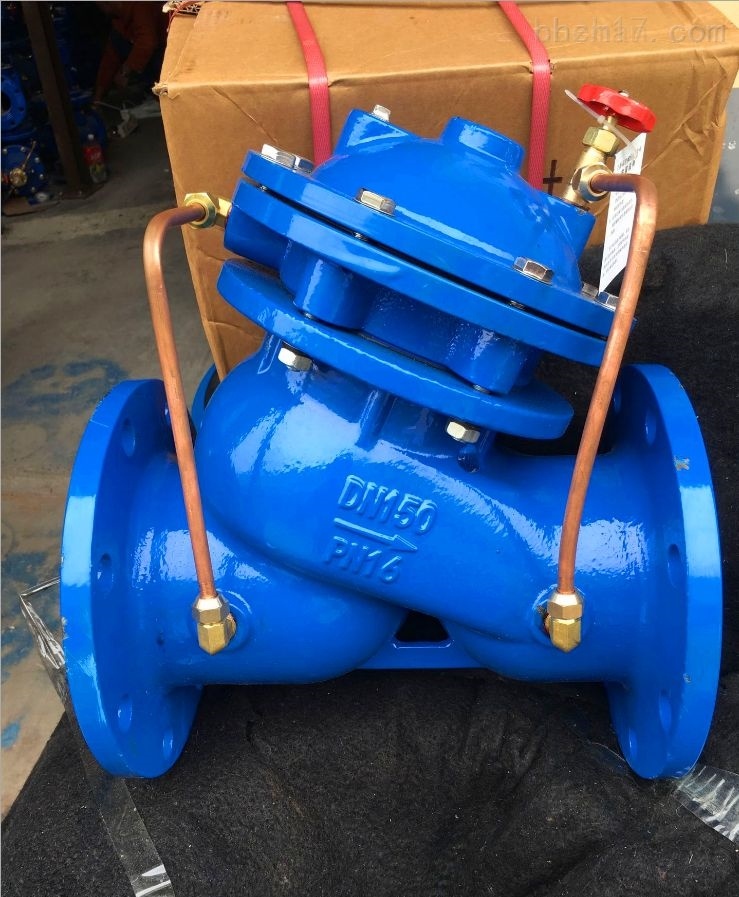
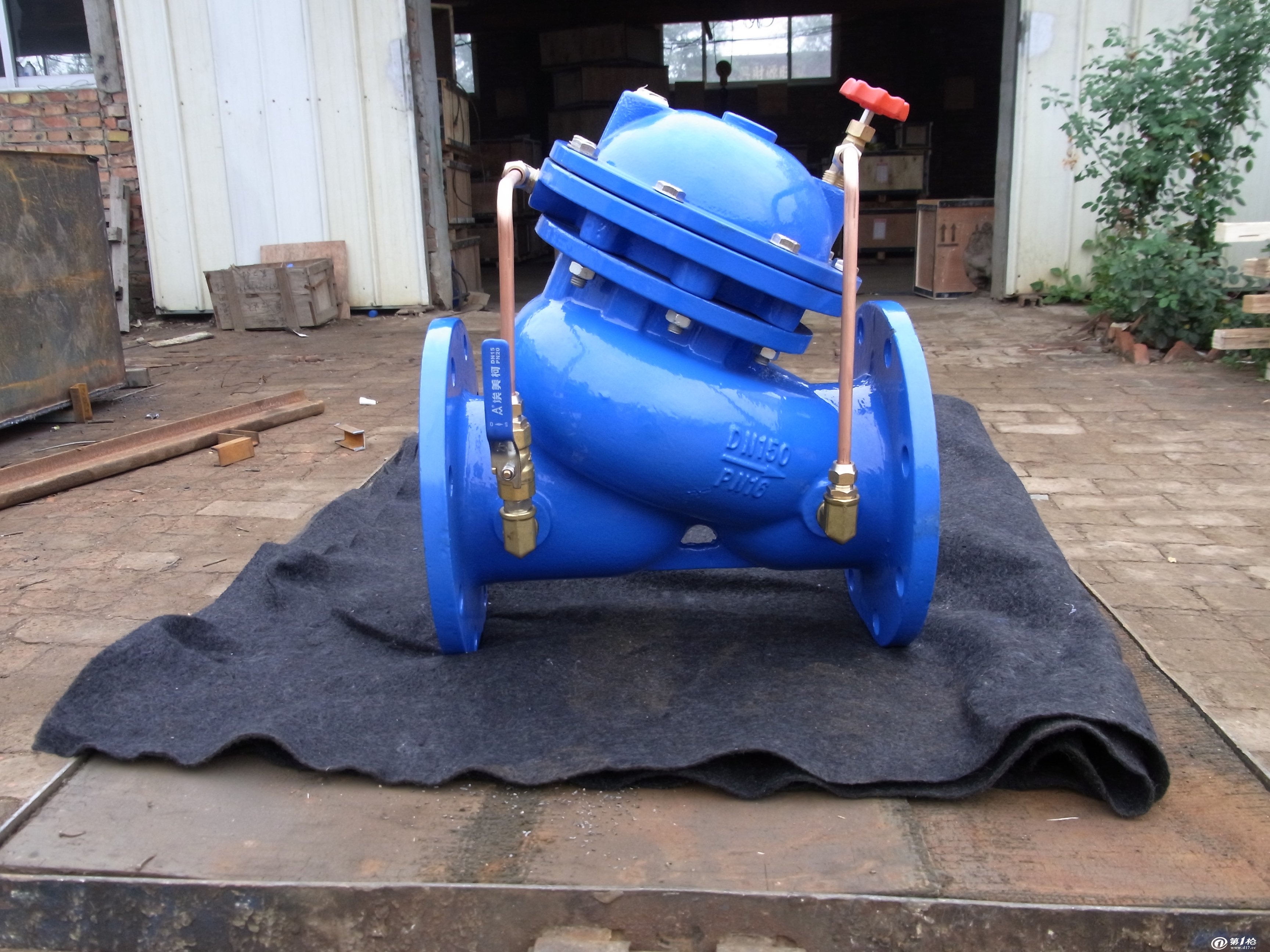
A multifunctional pump control valve consists of a main valve and regulating valve and receiver system, the valve body adopts DC type valve body, the main valve control chamber is diaphragm type or piston type double control chamber structure, the control chamber is a increased by one than the general hydraulic control valve, which increases the control function of the main valve and realizes the multi-functional control of the pump outlet such as slow opening, full opening, slow closing, and stopping, which realizes the multi-functional control of the pump outlet by a single valve and a single adjustment. Multifunctional control.
This product is used in high-rise building water supply systems and other water supply system pump outlet pipelines, to prevent and attenuate the pump start and stop the pipeline of water hammer, prevent water backflow to protect the pump, and maintain pipeline safety. In order to realize the automation of pump operation, simplify management, reduce labor, and improve reliability, people use hydraulic valves and electric valves to replace manual valves, a number of technical improvements to the monoblock valves, the emergence of slow-opening and slow-closing backstop valves, slow-acting open and close hydraulic valves, automatic slow-closing gate valves, double-speed self-closing valves and other new types of valves.
Product Detail Drawing
Product Basic Functions
Gate Valve
The gate valve is usually in a closed state, the gate valve is slowly opened when the pump is started, and when the pump is stopped, the gate valve is quickly closed first, and then slowly closed after a certain degree. Closed gate start and closed gate stopping of the pump, can effectively prevent the opening of the pump water hammer and stop the pump water hammer, at the same time, reduce the motor load when the pump starts, the pump at zero flow rate when the minimum shaft power, generally only 30% of the design shaft power. Another function of the gate valve is that when the gate valve is closed, it can provide safe access conditions for valves and pumps such as backstop valves and pumps installed between the gate valve and the pump, preventing the return of water from the pressure pipe.
Check Valve
The check valve prevents the flow of water caused by a sudden power failure from changing direction and prevents backflow. Sudden shutdown of the pump is prone to water hammer. When the geometric head height of the pump is large, the instantaneous high pressure of severe water hammer can lead to pipe rupture and serious production accidents.
Water Hammer Eliminator
Water hammer eliminator can effectively eliminate all types of fluids in the transmission system without the need to stop the flow of fluids in the case of irregular water hammer and surge in the transmission system may produce water shock wave shock, so as to achieve the elimination of destructive shock waves, play a protective purpose. So in order to prevent water hammer on the transmission pipeline damage method, often in the pump pressure water pipe installed on the water hammer eliminator.
Three-in-One Protection: How Multifunctional Control Valves Integrate Gate, Check, and Water Hammer Eliminator Functions
STORAEN’s control valve redefines industrial fluid management by merging three critical functions—gate valve isolation, check valve backflow prevention, and water hammer elimination—into a single, space-saving design. Engineered to replace traditional multi-valve setups, our flow control valve and water pressure control valve solutions simplify pipeline systems while enhancing safety and efficiency, making them ideal for high-rise water supply, industrial pumping stations, and utility networks.
1. Integrated Gate Valve: Precise Flow Isolation
At the core of this multifunctional control valve is a heavy-duty gate valve mechanism, providing reliable on/off control for maintenance or emergency shutdowns:
Full-Bore Passage: A parallel gate design (DN50–DN1400) ensures minimal pressure loss (≤0.01MPa) and unrestricted flow when fully open, outperforming conventional gate valves by 20% in energy efficiency.
Dual-Seat Sealing: Soft rubber or metal-to-metal seals (depending on media) achieve bubble-tight shutoff, critical for isolating pumps or pipelines during repairs without residual flow risks.2. Built-In Check Valve: Automatic Backflow Protection
Eliminating the need for a separate check valve, our design features a spring-loaded disc that closes instantly when flow reverses, protecting pumps from damaging backflow:
Low-Crack Pressure Design: The disc opens at just 0.05MPa, ensuring smooth forward flow in low-pressure systems while shutting within 0.2 seconds of flow reversal—faster than standalone check valves by 30%.
Particle Resistance: A streamlined valve body reduces debris accumulation, making it suitable for water containing small solids (e.g., sand, scale) without compromising seal integrity.3. Advanced Water Hammer Eliminator: Controlled Closure Technology
The third integrated function addresses the silent killer of pipelines—water hammer—through a dual-control chamber system:
Slow-Shut Mechanism: A diaphragm or piston-type control chamber (user-selectable pressure control valve types) adjusts closure time from 3–120 seconds, suppressing water hammer peaks to ≤1.5x working pressure (vs. 3x in traditional setups).
Three-Stage Operation:
Fast Closure of the Main Disc (80% stroke in 5s) to arrest high-velocity flow;
Gradual Closure of the Pilot Valve (remaining 20% over 30–120s) to eliminate pressure surges;
Automatic Locking in the closed position to prevent backflow during pump shutdowns.Tailored to Your Fluid Control Needs
Whether managing a high-rise water distribution network or an industrial cooling system, our water control valve and flow control valve types deliver unmatched versatility. The integrated design not only simplifies maintenance but also enhances system reliability by eliminating failure points between separate valves.
Upgrade to STORAEN’s control valve solution and experience the benefits of three critical functions in one robust package—engineered to protect your pipelines, extend pump life, and streamline operations. Explore our pressure control valve types today and discover why smarter fluid management starts with integrated innovation.
Diaphragm vs Piston Control Chambers: Core Technologies for Pressure Regulation in Multifunctional Valves
In STORAEN’s control valve designs, the choice between diaphragm and piston-type control chambers is critical to achieving precise pressure regulation and flow control. As two primary pressure control valve types, each offers unique advantages tailored to specific industrial needs—here’s how they work and where they excel.
1. Diaphragm Control Chambers: Smooth, Low-Noise Regulation for Clean Media
Ideal for water supply, HVAC, and low-particle systems, diaphragm chambers use a flexible EPDM or NBR membrane to translate pressure into motion:
Operation Principle: Upstream pressure acts on the diaphragm, pushing it downward to adjust the valve disc position. A return spring balances the force, enabling stepless flow modulation with minimal hysteresis (≤1.5% of full scale).
Key Benefits:
Cost-Effective & Leak-Proof: No mechanical seals or moving parts exposed to media, reducing maintenance by 20% and eliminating contamination risks in potable water or pharmaceutical lines.
Quiet Operation: The soft membrane absorbs vibration, making it suitable for noise-sensitive environments like high-rise buildings (noise ≤65dB during operation).
Limitations & Specs: Best for pressures up to 6.3MPa and temperatures -10°C–80°C; not recommended for abrasive fluids. Common in our water pressure control valve and flow control valve models for municipal applications.2. Piston Control Chambers: Heavy-Duty Performance for High-Pressure, Harsh Media
For industrial processes involving high pressure, high temperatures, or particle-laden fluids (e.g., wastewater, oil), piston chambers provide robust mechanical control:
Operation Principle: A cylindrical piston (cast iron or 316L stainless steel) converts hydraulic or pneumatic pressure into linear motion, directly actuating the valve stem with high torque (up to 500N·m).
Key Benefits:
Extreme Pressure Resistance: Handles up to 10.0MPa and temperatures up to 150°C, outperforming diaphragms by 60% in high-pressure scenarios like industrial boiler systems.
Abrasion Tolerance: A hard-chrome-plated piston surface resists scratches from sand, scale, or sludge, ensuring 50,000+ cycle life in abrasive environments—critical for mining or chemical plants.
Design Notes: Features a double-directional mechanism to prevent lateral movement, minimizing seat wear and maintaining sealing accuracy (leakage ≤0.01% of rated flow).When to Choose Diaphragm vs Piston?
Media Type: Diaphragm for clean liquids/gases; piston for dirty fluids, high-viscosity media (e.g., lubricating oil), or steam.
Control Precision: Diaphragm offers finer adjustment (0.5% resolution); piston prioritizes power and durability.
Industry Fit:
Diaphragm: Water distribution, building automation (water control valve applications).
Piston: Petrochemical, power generation, and heavy industry (paired with our flow control valve types for process pipelines).STORAEN’s Engineered Excellence
Customization Options: Both designs comply with control valve sizing standards (ISO 5208, GB/T 17213), with configurable stroke lengths (25–300mm) and feedback sensors (4–20mA) for automated systems.
Reliability Upgrades: Diaphragms feature anti-tear aramid reinforcements; pistons include self-lubricating PTFE rings, reducing friction by 30% compared to generic models.Make the Right Choice for Your System
Whether you need the precision of a diaphragm or the ruggedness of a piston, STORAEN’s control valve solutions ensure optimal pressure regulation for your unique working condition. By understanding these core technologies, you can select the ideal pressure control valve type to enhance efficiency, reduce downtime, and meet the most demanding industrial standards. Contact us today to explore how our engineering expertise can elevate your fluid control system.
Principles of Construction
Working Principle
(1) When the pump is stopped, the valve plate is closed at the outlet end and the upper chamber of the diaphragm under static pressure.
(2) When the pump starts, the water pressure is transmitted into the lower chamber from the bypass pipe, and the main valve plate and the slow-closing valve plate open slowly under the water pressure at the inlet end and the lower chamber.
(3) Under the pressure of the inlet end, the valve plate rises to the maximum opening state, the opening height is determined by the flow rate.
(4) The moment the pump stops, the flow rate and pressure are suddenly reduced, and the main valve plate starts to slide down under the action of gravity.
(5) When the flow rate is close to zero, the main valve is closed, the main valve plate is left on the relief holes to weaken the impact of water hammer; the main valve plate on the formation of the pressure difference between the lower and upper, the valve outlet water pressure from the bypass pipe into the upper cavity to promote the diaphragm pressure plate, so that the lower cavity water discharged into the valve inlet, the slow-closing valve plate began to slow down the closure.
(6) Slow closing valve plate completely closes the drain hole, and the valve back to the initial state of the pump.
Basic structure
The overall size of the valve is comparable to that of an ordinary check valve and consists of the main valve and external accessories. Among them, the main valve includes valve body, pressure plate and diaphragm, large valve plate, slow closing valve plate, valve seat, stem assembly, and other components. The slow closing valve plate is connected to the pressure plate and diaphragm with the stem assembly, the diaphragm is pressed between the valve cover and the diaphragm seat, and the up and down movement of the diaphragm drives the slow closing valve plate up and down.
The valve stem passes through the center hole of the large valve plate, so the large valve plate can slide along the valve stem within a certain range. Normally, the big valve plate is pressed on the valve seat by its own weight, so that the valve is in the closed state. Multifunctional pump control valve external accessories are installed on both sides of the valve diaphragm and valve inlet and outlet pipe, the lower chamber of the diaphragm and the valve inlet side of the connecting pipe are equipped with control valves, filters, and a special backstop valve.
The upper cavity of the diaphragm and the valve on the outlet side of the connection pipe is only equipped with a filter and a control valve. The movement and position of the large valve plate and the slow closing valve plate in the main valve determine the change in the valve’s working status and opening and closing. The valve’s external accessories and piping at any time before and after the valve pressure changes to the valve by the diaphragm divided into the upper and lower chambers, control the movement of the large valve plate and slow closing valve plate, and can be adjusted through the accessories to change the large valve plate and the slow closing valve plate speed, so that the valve’s opening and slow closing time in the specified range.
Working Pressure
This type of multifunctional control pump valve working pressure 1.0MPa, 1.6MPa, 2.5MPa, 4.0MPa, 6.4MPa, 10.0MPa six, the action pressure is greater than or equal to 0.03MPa, the media temperature in 0-80 ℃, slow closing time can be adjusted in 3-120s, the pipeline flow rate of 2m / s pressure loss of less than 0.01MPa, the peak of water hammer is less than 1.5 times the working pressure, nominal caliber DN50-DN1400. Pipeline flow rate of 2m/s when the pressure loss is less than 0.01MPa, the peak value of water hammer is less than 1.5 times the working pressure, nominal caliber DN50-DN1400.
Control Valves Specification
DN
L
H
D
D1
D2
n-Φd
PN1.0
PN1.6
PN2.5
PN1.0
PN1.6
PN2.5
PN1.0
PN1.6
PN2.5
PN1.0
PN1.6
PN2.5
40
240
395
150
150
150
110
110
110
84
84
84
4-18
4-18
4-18
50
240
395
165
165
165
125
125
125
99
99
99
4-18
4-18
4-18
65
250
405
185
185
185
145
145
145
118
118
118
4-18
4-18
8-18
80
285
430
200
200
200
160
160
160
1132
132
132
8-18
8-18
8-18
100
360
510
220
220
235
180
180
190
156
156
156
8-18
8-18
8-22
125
400
560
250
250
270
210
210
220
184
184
184
8-18
8-18
8-26
150
455
585
285
285
300
240
240
250
211
211
211
8-22
8-22
8-26
200
585
675
340
340
360
295
295
310
266
266
274
8-22
12-22
12-26
250
650
730
395
405
425
350
355
370
319
319
330
12-22
12-26
12-30
300
800
760
445
460
485
400
410
430
370
370
389
12-22
12-26
16-30
350
860
840
505
520
555
460
470
490
429
429
448
16-22
16-26
16-33
400
960
910
565
580
620
515
525
550
480
480
503
16-26
16-30
16-36
450
1075
1030
615
640
670
565
585
600
530
548
548
20-26
20-30
20-36
500
1075
1135
670
715
760
620
650
660
585
582
609
20-26
20-33
20-36
600
1230
1270
780
840
845
725
770
770
685
682
720
20-30
20-36
20-39
700
1650
1460
895
910
960
840
840
875
794
794
820
24-30
24-36
24-42
Main installation dimensions: (unit: mm)
What Is the Function of a Control Valve?
A control valve is a vital component in various industrial and manufacturing processes, serving the essential function of regulating fluid flow within a system. These valves are critical for maintaining the desired operational conditions in pipelines, tanks, and other fluid-handling facilities. Understanding the function of a control valve is crucial for professionals in engineering, manufacturing, and process management.
The primary purpose of a control valve is to modulate the flow rate of a fluid, whether liquid or gas, based on a set of defined parameters. It achieves this by adjusting its position in response to signals from a controller, which could be a manual operator or an automated system. This adjustment helps maintain specific process variables such as pressure, temperature, and flow rate within predefined limits.
Control valves utilize various mechanisms to perform their function. Common types include globe, ball, and butterfly valves, each designed for different flow control scenarios. By providing precise control over flow characteristics, a control valve plays a significant role in improving efficiency and safety in industrial processes.
Moreover, the proper functioning of control valves directly impacts system performance and reliability. When these valves operate correctly, they prevent issues such as pressure surges, flow instability, and leaks. Conversely, malfunctioning control valves can lead to costly downtime, safety hazards, and compromised product quality.
In summary, the function of a control valve is to ensure accurate and efficient regulation of fluid flow in various applications. Their role is indispensable in maintaining optimal operating conditions, enhancing energy efficiency, and safeguarding overall system integrity. Thus, understanding and implementing effective control valve strategies is essential for achieving operational excellence in any fluid processing environment.
Control Valve Types and Applications
Control valves are essential components in various industrial processes, responsible for regulating the flow of fluids by varying the size of the flow passage as directed by a controller. Understanding the different types of control valves and their applications is crucial for optimizing system performance and ensuring operational safety.
One of the primary types of control valves is the globe valve, known for its excellent throttling capabilities. It features a spherical-shaped body that allows for controlled flow and is typically used in steam, water, and air applications within power plants and chemical processing units.
Another common type is the ball valve, characterized by its quick shut-off capability. This valve uses a rotating ball to control flow and is commonly used in applications requiring tight sealing and minimal pressure drop, such as in water treatment facilities and oil and gas pipelines.
Butterfly valves are also prevalent in various applications, designed for on-off and throttling service. Their compact design and lightweight nature make them suitable for large-volume and high-flow applications like HVAC systems and water distribution networks.
When it comes to precision and responsiveness, electromagnetic control valves are widely used in automated systems. These valves employ electrical signals to operate and are frequently found in irrigation systems and industrial automation processes.
Lastly, globe-style control valves provide enhanced performance for critical applications where accurate flow regulation is necessary. These valves are often implemented in rigorous environments such as chemical manufacturing and petroleum refineries, where precise control is paramount.
In summary, the selection of a control valve depends on the specific requirements of the application, including flow characteristics, pressure drops, and operational efficiency. Understanding the varied control valve types and their applications can significantly improve system reliability and efficiency, making them a critical aspect of any industrial process.
-
-
-